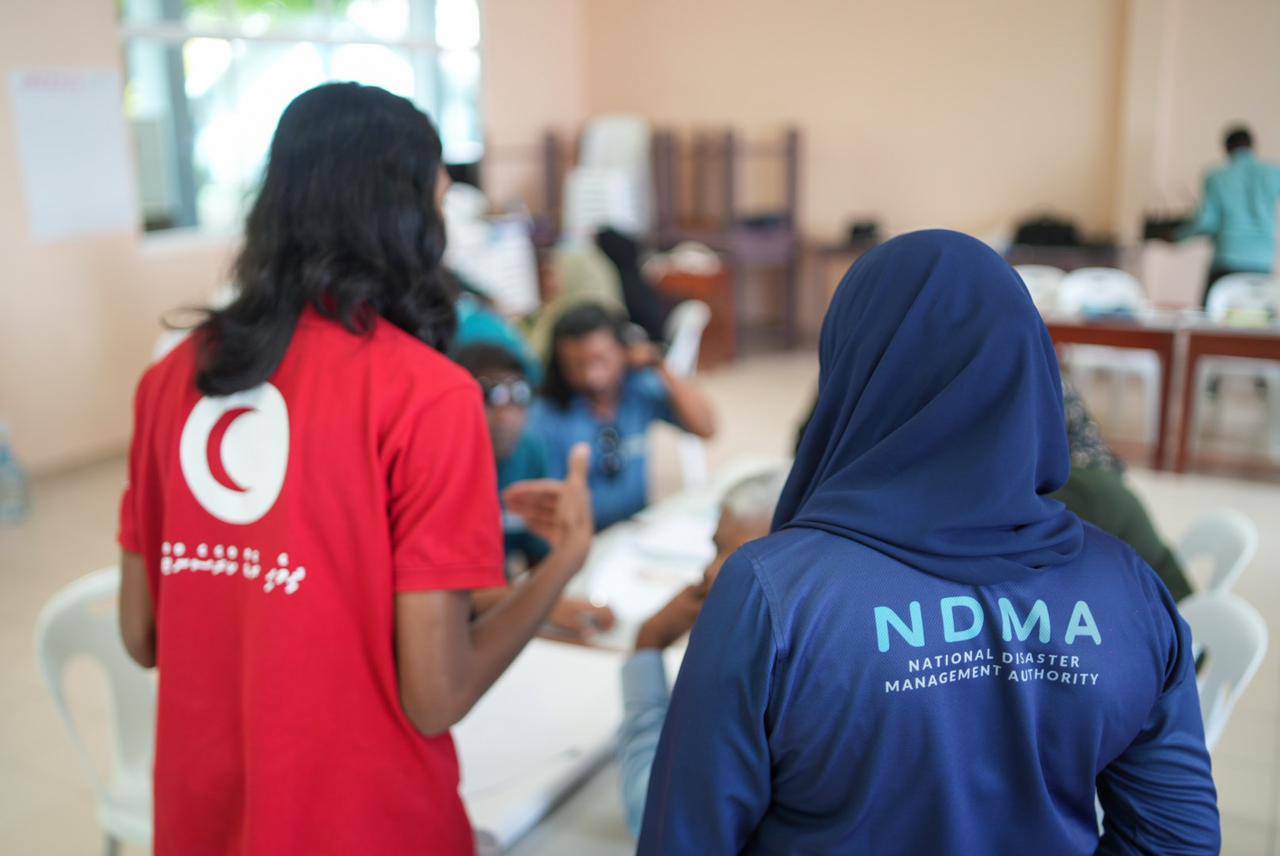
To address this, the Maldivian Red Crescent (MRC) and National Disaster Management Authority (NDMA), through the Enhancing Resilience Planning and Strengthening Community Preparedness (ERCP) Project funded by United States Agency for International Development’s Bureau of Humanitarian Assistance (USAID BHA), are committed to educating and empowering young people on disaster preparedness and climate action across the Maldives. By providing them with the knowledge and skills they need to understand and respond to disasters, we can help them to protect themselves and become agents of change in their families and communities.
To promote young people's rights to safety and protection, we must commit to disaster risk reduction (DRR) practices that are inclusive and effective. As such, empowering young people as active participants is essential. In all DRR activities that seek meaningful child and youth engagement, it is imperative to provide platforms to express their views, participate in decision-making processes, and contribute to solutions that address their unique needs and vulnerabilities.

How the ERCP project empowers youth in DRR:
Through their participation in Enhancing Vulnerability and Capacity Assessment (EVCA)/ Island Disaster Management (IDMP) workshops, ERCP includes youth as equal stakeholders in local and national planning processes
Through the EVCA, a comprehensive evaluation is conducted to assess the capacities and vulnerabilities of children and youth. This assessment explores eleven dimensions of resilience, including critical areas such as health, nutrition, water, sanitation, economic opportunities, etc. The results of this assessment can inform evidence-based interventions by the government and other agencies, ensuring equitable access to resources, opportunities, and rights for all children and youth.
Through initiatives such as Standard First Aid (SFA) training, Psychological First Aid (PFA) training, and the development of the Community Emergency Response Teams (CERT), ERCP is investing in building and strengthening the capacities of youth in DRR so they can become peer educators raising awareness about disaster risk and climate change, and influence friends and families to reduce disaster risks at home and in school. As such MRC and NDMA recognize young people’s role and contribution to substantive issues beyond factors specific to their demographic.

Children and young people are acutely aware of the dangers posed by disasters and climate change because they understand that the consequences will significantly affect their future. Seeing and treating them as passive victims overlooks the potential of their unique and collective capacities to drive solutions.