
Strategic Plan 2019 - 2030
The Maldivian Red Crescent's Strategic Plan 2019–2030 sets the long-term direction for MRC's humanitarian work over twelve years — defining what we are working towards, how we will get there, and what success looks like for the communities we serve
Read Strategic Plan 2019-2030 →Strategic Plan 2019 - 2030
The Maldivian Red Crescent's Strategic Plan 2019–2030 sets the long-term direction for MRC's humanitarian work over twelve years — defining what we are working towards, how we will get there, and what success looks like for the communities we serve
Read Strategic Plan 2019-2030
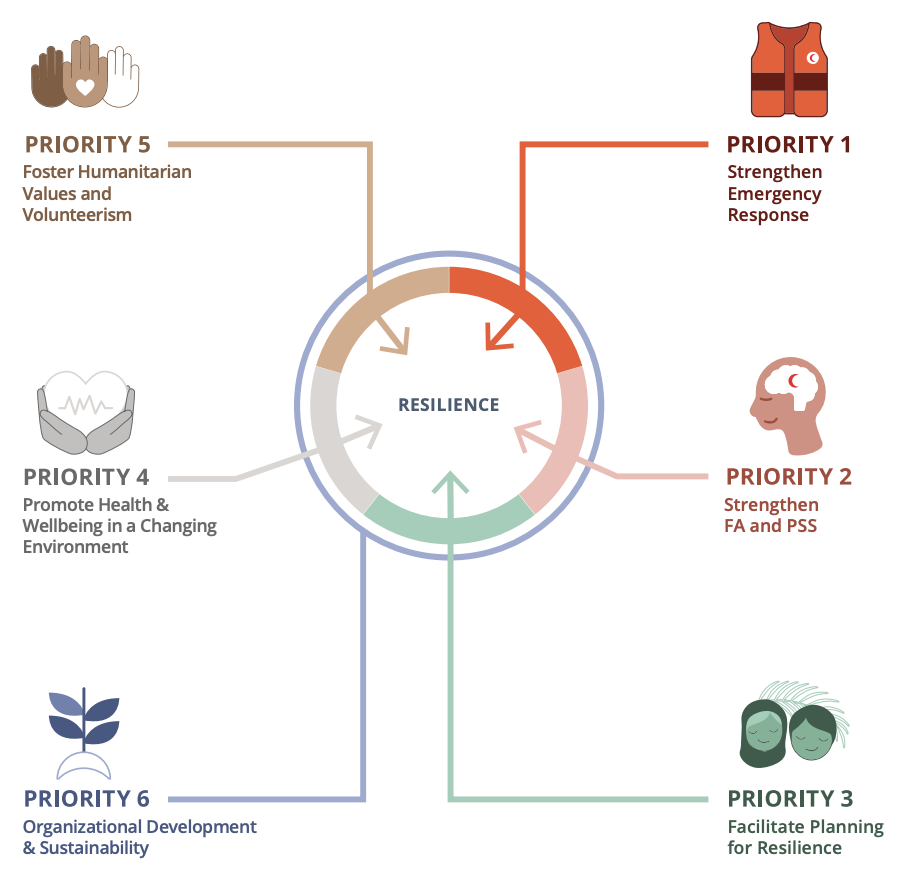
This MRC Strategic Plan 2019-2030 centres on the concept of resilience. It advocates a shift in thinking and practice, recognising the need for better coherence in the areas of disaster management, climate change, and development work. This approach aims to increase effectiveness of MRC’s humanitarian role and work done in Disaster Risk Management.
The Plan sets broad objectives against 2030 aligned with the Sustainable Development Goals and is structured around four-year results frameworks that allow MRC to measure its progress, course-correct where needed, and update its approach every four years while keeping the 2030 goals in sight.
Global frameworks this plan aligns with
The Plan sets broad objectives against 2030, reflected in the alignment with other key global development agendas
The Agenda 2030 – UN Sustainable Development Goals (SDGs)
The programmatic framework proposed for the MRC will contribute to three main SDGs – SDG 3 on health, SDG 10 on reducing inequality, and SDG 13 on climate action.
The Sendai Framework for Disaster Risk Reduction (SFDRR) 2015–2030
The relevance of MRC strategic priorities are aligned with the targets. The most relevant targets include Target A, B, E and G
The Paris Agreement
MRC’s programmatic actions are relevant and directly feed into the Government of Maldives reporting on the Nationally Determined Contributions
The Global Compact for Safe, Orderly, and Regular Migration (GCM)
IFRC Strategy 2030
Towards Reslience
MRC's Strategic Plan is organized around six strategic priorities. Together, they cover the full scope of MRC's humanitarian mandate in the Maldives from the moment an emergency response, to the long-term work of building communities that can withstand whatever comes next. etc etc
Priority 1 - Strengthen Emergency Response
The primary focus of the first strategic priority area is emergency response, a crucial component of MRC’s disaster risk management efforts in the Maldives. Mandated by the MRC Law 07/2009, MRC plays a key role as an auxiliary body to the state, responding to emergencies and disasters nationwide in close collaboration with stakeholders such as the National Disaster Management Authority (NDMA) and first response agencies. This priority area leverages MRC’s existing capacity, experience, and strengths in providing emergency response services through community-based emergency response teams (ERTs).
Priority 2 - Strengthen First Aid & Psychosocial Support
This priority area builds on MRC’s established role and expertise in delivering First Aid and Psychosocial Support Services (PSS) within emergency response frameworks. While emergency response services typically include a variety of actions, this priority area establishes MRC’s lead role and core expertise in emergency services such as First Aid and PSS. MRC also focuses on strengthening and the scaling up the organization’s First Aid and PSS standards and services, enhancing their quality, and the overall First Aid capabilities of communities and service providers through tailored training Programmes, further expanding its reach across communities in the Maldives.
Priority 3 - Facilitating Planning for Resilience
Focusing on strengthening risk-based resilience planning at island and city levels, this priority area builds on MRC’s role in the preparation of risk assessments using the Vulnerability and Capacity Assessments (VCA) tool. The work under this priority entails the expansion of MRC’s work in conducting risk assessments, increasing the utilization of data and information gathered from the assessments in local level planning and advocating for a national risk assessment guideline. Local level planning across the country can benefit from a resilience-based perspective, covering planning not only for disaster management, but also towards adaptation and climate resilient development.
Priority 4 - Promote Health and Wellbeing in a Changing Climate
This priority area focuses on promoting the integrated approach to addressing existing and emerging health issues in the Maldives. In addition to factoring in climate change related impacts on health, MRC has worked in epidemic preparedness and control, including responses to rise in cases of influenza and dengue. This priority takes an integrated approach, with an emphasis on preparedness and prevention activities, rather than emergency response. Focus is also on expanding health related outreach and interventions to foreign migrant worker populations, as well as collaborating with the community on preparedness and prevention activities
Priority 5 - Fostering Humanitarian Values and Volunteerism
Centered on inclusivity and partnership building, this priority involves the formation of meaningful partnerships between MRC Units and local actors. With the goal of increasing the inclusion of vulnerable groups in community development activities, this approach is based on the belief that more socially inclusive communities are more resilient and better able to recover from emergencies and disasters. It also entails actions such as institutionalizing and localizing a community engagement framework that promotes inclusivity and partnerships based on MRC’s experience
Priority 6 - Organizational Development and Sustainability
This strategic priority focuses on organizational development and sustainability across five key areas: governance and membership, volunteer management, resource mobilization, partnerships and outreach, and management and service delivery. It aims to strengthen MRC's internal governance structures, improve data management and operational workflows, and increase diversity and representation among members and volunteers. Alongside internal development, the priority drives the expansion of MRC's reach and visibility across the Maldives — building the institutional foundation that sustains all other areas of humanitarian work.